The challenge
An operations team was automating things the fragile way. Scripts only one person understood, spreadsheets glued together with hope, and hours of daily copy-paste wherever the glue didn't hold.
They didn't need another script. They needed a tool that let the people who know the process automate the process, without a developer in the loop for every change.
What we did
A canvas instead of code
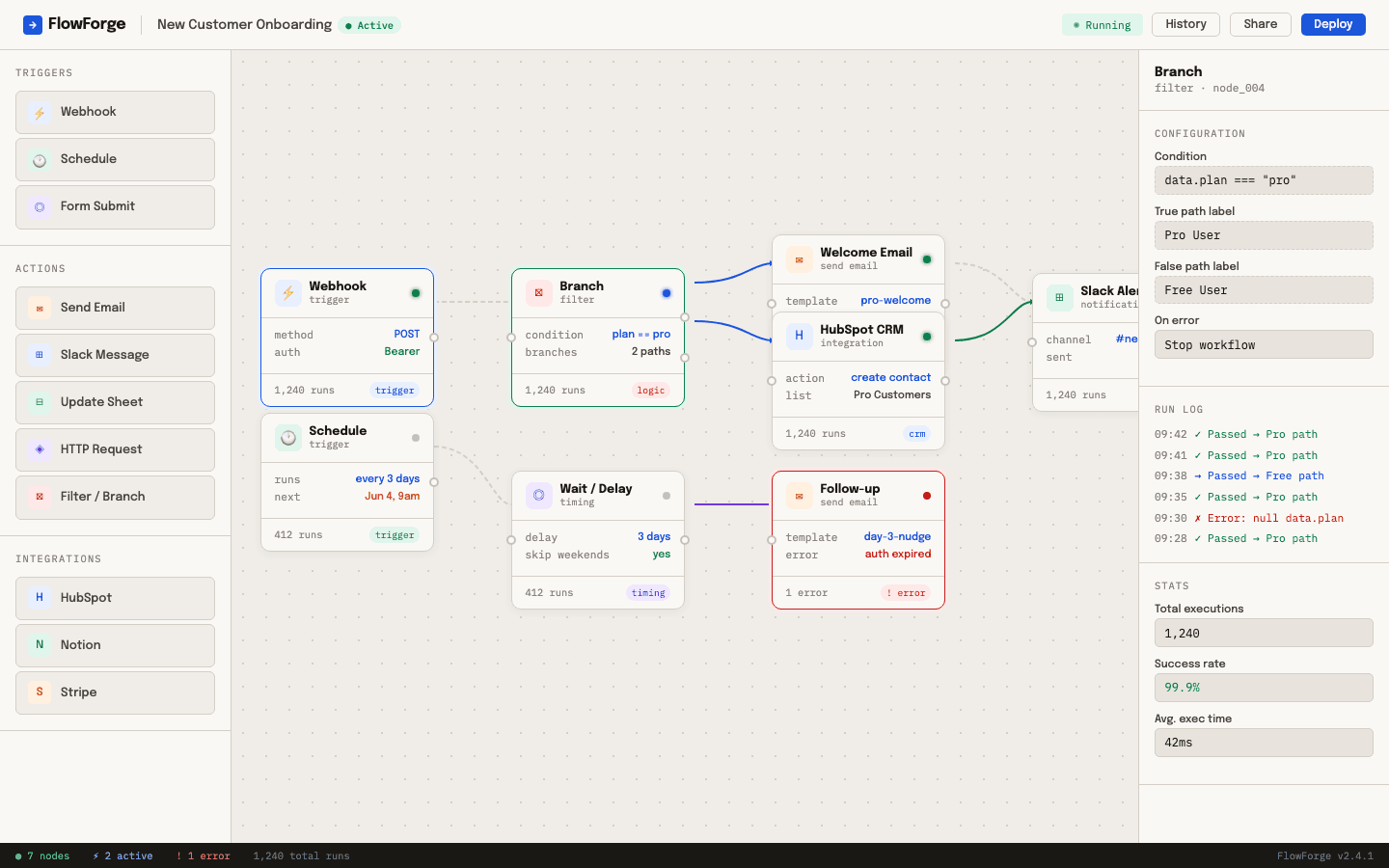
Drag-and-drop workflow building with plain-language steps. Triggers, conditions, actions. If you can describe the process, you can build it.
Every run on the record
A run history shows each execution with its inputs and outcome. Did it work becomes a glance, not an investigation.
Failures that announce themselves
When a step fails, the team gets told which step and why, immediately. No more silent breakage surfacing weeks later in bad data.
Safe for non-developers
Test mode runs any workflow against sample data before it touches live systems. The whole team can experiment without fear.
The outcome
The team automated its own morning busywork. The repetitive data-moving that used to eat the first hours of every day now runs itself, and when something breaks, they know before it matters.
“The automation saves our team 3 hours every day.”
